
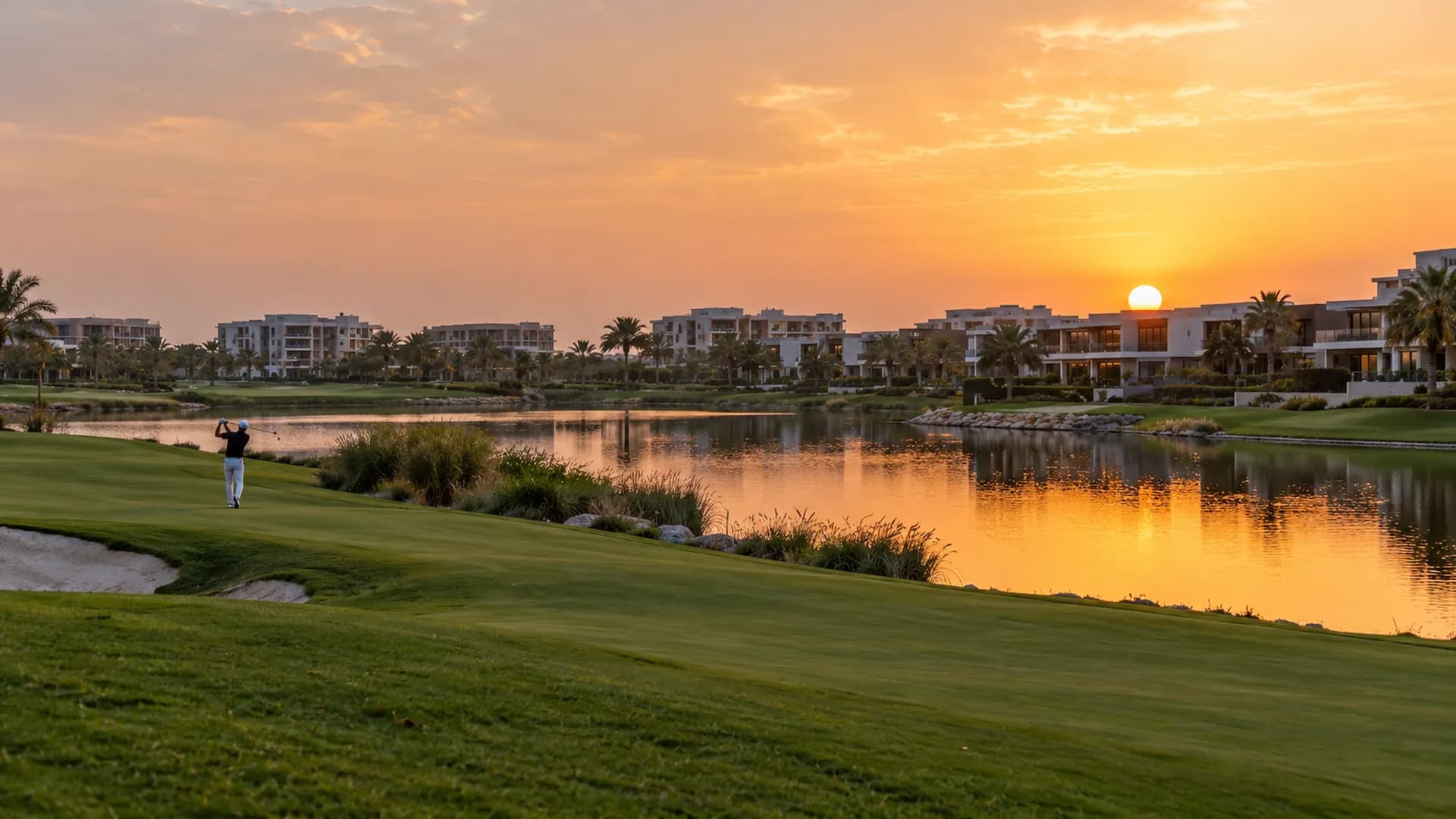
Al Badia Festival City is the residential side of Dubai Festival City, a creek-side mixed-use destination on the Deira bank where homes sit alongside retail, hotels, offices and schools. Buyers and tenants searching by that name are usually looking for the low-rise landscaped apartments rather than the mall. This guide explains what the residential stock contains, how tenure and costs work here, and what to check before you sign.
What is Al Badia, and where does it sit in the destination?
Dubai Festival City is a single large development along the Dubai Creek containing retail, hospitality, offices, a marina frontage and residential districts. Al Badia is the landscaped, lower-density residential part of it, and it is the name most people actually search for when they mean living there rather than shopping there.
That distinction matters. Much of what is published about the destination describes the mall, the hotels or the golf club. None of that tells you anything about a specific apartment's tenure, service charge, condition or outlook — which is what you are buying.
How do you actually travel from here?
The destination sits on the Deira side of the creek, on the Ras Al Khor corridor, with road access towards Sheikh Zayed Road and the airport. There is no metro station inside the community; the nearest stations sit off the community and require a drive or a connection, so treat this as a car-first address and verify the journeys yourself.
Drive to your workplace at your real departure hour, to the school you are shortlisting on a school morning, and to the airport at the time you would normally fly. Creek-side road corridors behave very differently at peak. Check the building's own exit too: which gate you use and where it puts you on the road network.
What does the residential stock contain?
Two broad formats. The first is low-rise, landscaped apartment living in Al Badia Festival City, arranged around greenery, pools and internal walkways, which appeals to households who want an apartment without a tower environment. The second is tower living, of which Marsa Plaza is one example, offering creek and skyline outlooks and a lock-up-and-leave routine.
They are different products with different service charges, different maintenance profiles and different tenant pools. Decide which format you want before you compare any two units, because a figure from one tells you very little about the other.
Al Badia Residences: what should you check there?
This is the name attached to the residential blocks inside the district, and it carries its own search demand, which means people shop for it directly. Ask for the specific building, the floor, the orientation and the exact walking route to the pool, the parking and the gate — not the district-level description.
Because these are established buildings rather than new launches, condition and management matter more than specification. Ask how the building has been maintained, what the owners' association has budgeted, whether cooling is district or split, how parking is allocated, and what the lobbies, lifts and corridors look like on a normal weekday rather than on a viewing appointment.
Hillside Village and the low-rise blocks
Hillside Village is one of the named clusters buyers search for within the residential district. Treat any named cluster inside Al Badia Festival City the same way: confirm which buildings it covers, which pool and parking serve it, whether its charges are billed separately from the wider district, and how far it genuinely is from the school gate, the retail and the exit.
Walk it at two different times of day. Shade, noise, footfall and parking pressure all change between a quiet morning and a weekend evening, and a landscaped low-rise setting can feel very different at each.
Marsa Plaza and the creek-view question
A creek or skyline outlook is the most commonly paid-for feature here, and it is also the least reliably described. Confirm what the view actually is from the main living rooms, not from a corner of a bedroom. Check the angle, the floor, what sits between the unit and the water, and whether a future plot could change it.
Then visit after dark and in the afternoon heat. Glare, western sun, road noise and event activity on the waterfront all belong in the decision. A partially obstructed view and an open one are different products and should never be compared as if they were the same.
What should you verify before buying or renting?
This is Dubai, so the Dubai framework applies. Verify the title deed through official DLD channels and confirm the seller's name matches it and whether a mortgage is registered. Establish the tenure explicitly: check whether the specific plot is freehold or a long leasehold interest, because that changes financing, resale and inheritance. Obtain the developer or community no-objection certificate, which is not issued while service charges are outstanding.
On money, the trustee fee is AED 4,000 plus 5% VAT once the price reaches AED 500,000, the deed itself costs AED 580 to issue, and the DLD transfer fee of 4% sits on top; together with the smaller items these land at roughly 7–10% of the price, and no bank lends against them. Service charges are approved annually by RERA per project, billed per square foot through Mollak, and published free on the DLD service charge index — look up your exact project and year. All of this reflects what was published as of September 2026 and can change; confirm each item at its official source.
Who does it suit, and who should look elsewhere?
It suits a household that wants retail, schooling, dining and hotels within one destination, values a landscaped low-rise setting or a creek outlook, and is comfortable driving. It also suits a buyer who prefers an established, operating community with a visible maintenance record over a new launch.
It suits less well someone who needs to walk to a metro station, someone whose routine is concentrated on the Marina or Sheikh Zayed Road side of the city, or a buyer who wants a large private garden. A mixed-use destination also means visitor traffic and event activity, which some households welcome and others do not.
When does this apply?
This guide applies to residential purchases and tenancies in Al Badia Festival City and the wider Dubai Festival City residential districts. It does not apply to retail, hotel or office components, which follow different rules and different economics entirely.
Fees, approved charges and procedures reflect what was published as of September 2026 and can change. Verify each one at its official source before you commit.
Bottom line
The destination's convenience is real, but it is not what you buy. You buy one building, one tenure, one outlook and one service-charge position. Establish those four things in writing, compare only against genuinely similar units, and let the mall and the hotels be a bonus rather than the argument.
Frequently asked questions
Is Al Badia the same as Dubai Festival City?
Not quite. Dubai Festival City is the whole mixed-use destination on the creek, including retail, hotels, offices and leisure. Al Badia Festival City is its landscaped residential district, and it is the name people search when they mean living there. Keep the two apart when you read descriptions, because most published material about the destination describes the commercial side rather than any home.
Is the property here freehold?
Do not assume it. Tenure in Dubai can be freehold or a registered long leasehold or usufruct interest of up to ninety-nine years, and the difference affects financing, resale and inheritance. Check the specific plot against the official DLD designated-areas list and read the tenure recorded on the title deed itself, rather than relying on a listing description or a marketing brochure.
Is a creek view worth paying more for?
It can be, but only when it is genuinely open from the main rooms, on a floor and angle that hold it, and reasonably protected from future building. Visit in daylight and after dark, check glare and noise, and compare only with units that have a comparable outlook. A partial view is not a discounted open view; it is a different product.
Is there a metro station?
Not inside the community. The nearest stations sit off it and require a drive or connection, so plan on a car-first routine and confirm the current network position yourself on the official transport channels. Test the door-to-door journey at your real travel hour rather than relying on a distance quoted in a listing or on a map.
What does a tenant need to check?
The tenancy must be registered through Ejari. Establish who maintains the air-conditioning and what cooling arrangement applies, since district cooling is billed separately where it is used. Photograph the condition at move-in. Rent changes at renewal follow the RERA rental index slabs and require ninety days' written notice before the renewal date, so diarise that deadline.
How do I check the service charge before I commit?
Use the DLD service charge index, which publishes the RERA-approved rate per square foot for each project and year and is free to check. Take the figure for your exact building and year, not a district estimate. Ask the owners' association what the reserve fund position is as well, because that is what pays for major replacements later.
Related guides
- Dubai Creek Harbour Property Guide: Waterfront Apartments and Investment Checks
- Culture Village Dubai Property Guide: Waterfront Apartments and Buyer Checks
- Dubai Creek Beach Property Guide: Apartments, Urban Beach Living and Project Checks
- Dubai Property Service Charges: How to Check Them and Measure Their Impact
- Freehold vs Leasehold in Dubai: What Buyers Need to Know
Laguna Life is a DLD/RERA-registered brokerage; we begin from your goal, not from the available inventory, and we confirm every figure at its official source. Name the building and the unit, and we will check the tenure, the charges and the outlook together — on WhatsApp at +971 56 100 0928 or through lagunalife.ae. Register your interest now.