
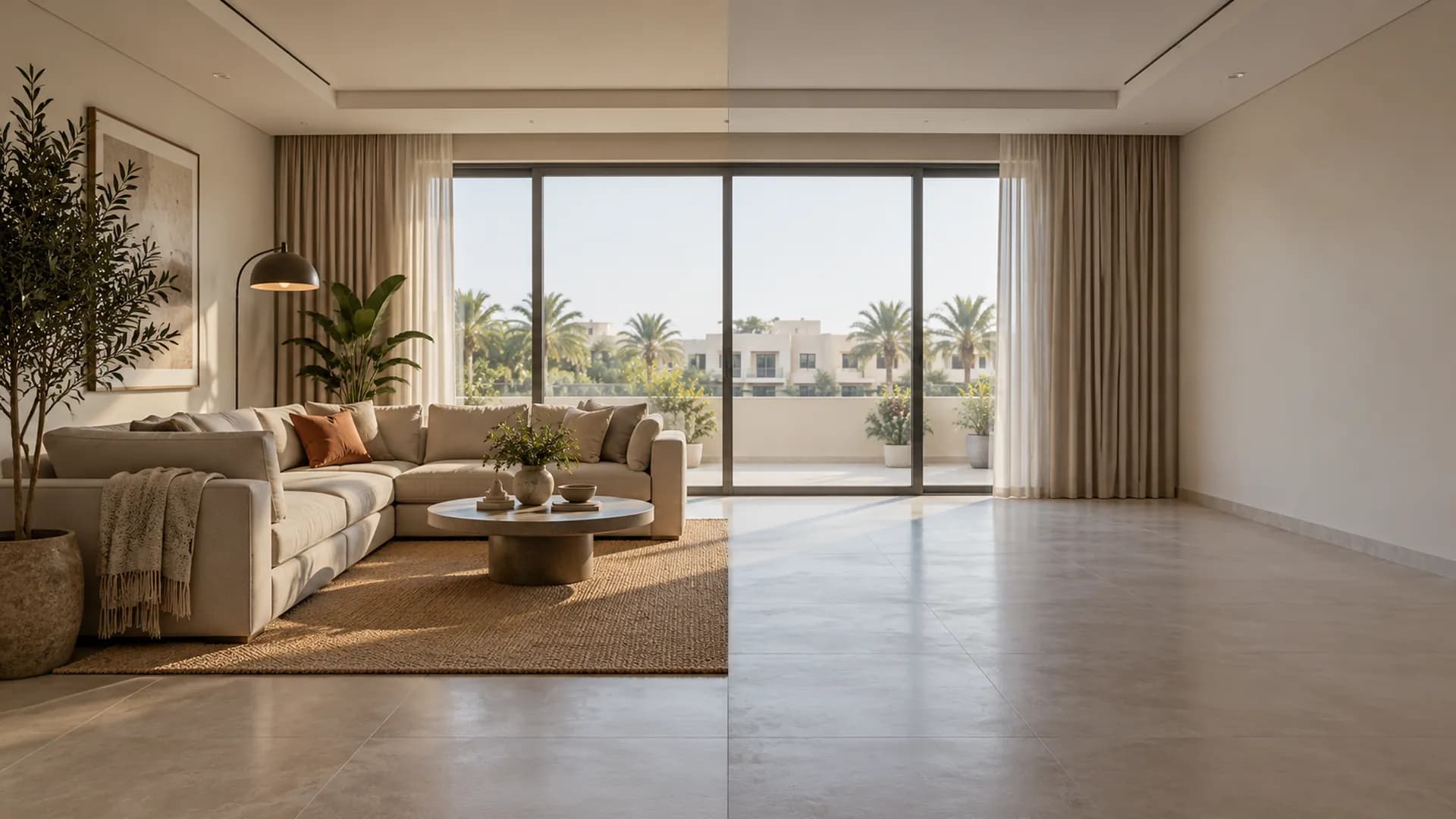
Furnishing can change who rents a Dubai property, how quickly they can move in, the achievable gross rent and the amount of work required from the owner. A turnkey apartment may suit relocating professionals, corporate tenants or holiday-home guests, while an unfurnished home may appeal to residents who want stability and bring their own belongings. Neither strategy is universally more profitable.
The decision should be made at building and unit level. An investor must compare verified tenant demand, achievable rent, vacancy, furniture cost, replacement cycles, utilities, management and the likely holding period. The option with the higher advertised rent may produce the lower net return once operating costs and turnover are included.
What is the short answer?
Choose furnished when the location and unit type have proven demand for flexible, ready-to-live accommodation and the extra net income reasonably covers furniture, replacement, utilities and management. Choose unfurnished when the target tenant values a longer stay, the rent premium for furniture is weak, or the owner wants simpler operations. Compare realistic annual net income under both scenarios before buying or furnishing.
Which evidence should be checked before deciding?
Start with registered rental evidence for the same project, unit size and contract type where available, then test it against current competing stock. Portal advertisements can show market positioning but not the final contracted rent or occupancy. Speak with more than one active leasing specialist and ask which tenant profiles actually complete in the building.
Next, build a full furnishing budget. It should cover furniture, appliances, window treatments, kitchenware where relevant, delivery, installation, inventory control, repairs and eventual replacement. A furnished premium that looks attractive in the first year may disappear if the fit-out is expensive, frequently damaged or poorly matched to tenant expectations.
· Compare achieved or registered rents, not only advertised asking rents.
· Separate annual tenancy demand from licensed holiday-home demand.
· Calculate furniture cost over a realistic useful life rather than treating it as permanent.
· Include vacancy, cleaning, utilities, consumables and management where the owner pays them.
· Check the building's rules, access procedures and tenant profile before choosing the strategy.
How should the options be compared?
Furnished property offers speed and convenience. It can reduce a tenant's setup burden and make the unit easier to market visually, but it creates more moving parts for the owner. Quality must match the rent position: inexpensive furniture in a premium building can weaken the offer, while an excessive fit-out may never be recovered through rent.
Unfurnished property usually shifts furniture and utility responsibility to the tenant and can suit longer occupancy. However, the landlord still needs a clean, functional unit with appropriate appliances and fixtures as agreed. In some compact or corporate-led locations, an unfurnished unit may take longer to lease because competing stock is turnkey.
· **Furnished:** potentially broader appeal to mobile tenants, but higher setup and replacement exposure.
· **Unfurnished:** simpler inventory and lower recurring involvement, but tenant demand must support it.
· **Annual lease:** generally more predictable operations, regardless of furniture status.
· **Holiday home:** a separate licensed operating activity, not merely a furnished annual rental.
What is the practical decision process?
Ask for a side-by-side rental assessment before purchasing. Use the same vacancy assumption and compare unfurnished annual rent, furnished annual rent and—only if legally and operationally suitable—a licensed holiday-home case. Deduct every cost paid by the owner so the three outputs are net and comparable.
If furnishing wins, design for durability, easy replacement and the target tenant rather than personal taste. Prepare an itemised inventory with photographs and condition records. If unfurnished wins, define clearly which appliances, fitted items and maintenance obligations remain with the property so the listing and tenancy contract are consistent.
· Collect comparable rental contracts and active competition for both strategies.
· Obtain at least two itemised furnishing and setup quotations.
· Model conservative vacancy, management, cleaning, utility and replacement assumptions.
· Review performance after each tenancy and update the strategy as the building matures.
Which risks can change the answer?
The largest furnished-property mistake is treating the full rent difference as profit. Furniture depreciation, damaged items, cleaning, utilities and management can materially reduce the spread. A generic package can also make the property look identical to competing units, forcing the owner to compete on price.
Unfurnished property carries different risks. A landlord may underestimate vacancy in a furnished-dominant building or present the unit without the appliances expected by its tenant segment. Changing strategies later creates cost and downtime, so the initial decision should follow evidence rather than convenience.
· Do not promise holiday-home income without a valid DET permit and compliant operation.
· Do not omit furniture condition and included items from the tenancy documentation.
· Do not assume the tenant will pay every utility or maintenance item; state responsibilities clearly.
· Do not overcapitalise the interior beyond what comparable rents and resale buyers support.
What does the current Dubai market context add?
Dubai's rental market contains long-term residents, corporate occupiers and short-stay visitors, but their demand is distributed unevenly by area, building and unit type. DLD rental data should be read together with current competition and the owner's actual operating model. A furnished strategy that works in a serviced central building may not transfer to a family-led suburban community, and the reverse can also be true.
Which related search questions does this decision also answer?
The same decision also appears in searches for furnished vs unfurnished property Dubai, furnished apartment investment Dubai, unfurnished apartment investment Dubai, is furnished property better investment Dubai, furnished vs unfurnished rental yield Dubai, furnished apartment for sale Dubai, unfurnished apartment for sale Dubai, furnished property rental demand Dubai, unfurnished property rental demand Dubai, furnished apartment rent premium Dubai, furniture cost apartment Dubai, furnishing package Dubai property, ready to move furnished apartment Dubai, turnkey property investment Dubai, furnished apartment maintenance costs Dubai, furnished rental vacancy Dubai, unfurnished long term rental Dubai, furnished short term rental Dubai, best tenant profile furnished apartment Dubai, best tenant profile unfurnished apartment Dubai, furnished property service charges Dubai, furnished property management Dubai, furniture depreciation rental property Dubai, furnished apartment resale value Dubai, unfurnished apartment resale value Dubai, furnished property ROI calculator Dubai, furnished vs unfurnished lease Dubai, buy to let furnished apartment Dubai, fully furnished vs semi furnished Dubai, furnished property investment checklist Dubai. These phrases are answered through the calculations, documents and verification steps in this guide; they are not separate promises.
Frequently asked questions
Is furnished or unfurnished property the better Dubai investment?
Neither is always better. Furnished can suit proven mobile or turnkey demand; unfurnished can suit stable longer-term residents and simpler operations. Compare the exact net-income cases.
How much extra rent can furnished property achieve?
The premium varies by building, unit and tenant profile. Use achieved or registered rents and deduct furniture, vacancy, utilities, cleaning and management before treating the difference as profit.
How much does it cost to furnish an investment apartment?
It depends on size, quality and target tenant. Obtain itemised quotations covering furniture, appliances, window treatments, delivery, installation, inventory and an eventual replacement reserve.
Which tenant profiles prefer furnished homes?
Relocating professionals, corporate occupants and some flexible-stay residents may value turnkey homes. Families and established long-term tenants may prefer their own furniture.
Who pays for furniture repair and replacement?
The tenancy contract and cause of damage determine responsibility. Use a signed inventory and condition record to distinguish normal wear, owner obligations and tenant-caused damage.
Is furnished property better for short- or long-term rental?
It can serve either, but short-term rental is a separately regulated operating model requiring DET approval. Compare licensed short-term and annual net income rather than assuming furnished means short-term.
Does furniture increase the property’s resale value?
Sometimes for a turnkey buyer, but used furniture rarely retains its original cost. Value depends on quality, condition, design relevance and whether the buyer wants the package.
How can I assess a developer furnishing package?
Request the itemised specification, brands or quality level, warranty, replacement availability and handover inventory. Compare the package price with independent quotations and realistic rental value.
How do I calculate net ROI after furniture costs?
Deduct amortised furnishing and replacement, service charges, vacancy, management, maintenance, utilities and cleaning from realistic annual rent, then compare the result with total cash invested.
How do I choose the right option for a specific area?
Review registered rents, current competing stock, tenant profiles, average stay and management requirements for the exact building and unit type. Do not transfer one area's strategy to another without evidence.
Build a shortlist from verified evidence
Unsure whether your Dubai investment should be furnished or unfurnished? Leave your phone number with Laguna Life. We will compare tenant demand, realistic rents and the complete operating cost for the exact building, then recommend the strategy that best fits your income and management goals.
Sources reviewed
· Dubai Land Department — Real Estate Data, including registered leases: https://dubailand.gov.ae/en/open-data/real-estate-data/
· Dubai Land Department — Rental Valuation: https://dubailand.gov.ae/en/eservices/request-for-valuation-of-property-lease/
· Dubai Land Department / Mollak — Service Charge Index: https://mollak.dubailand.gov.ae/publicpages/service-charge-index.html
· Dubai Department of Economy and Tourism — Apply for a Holiday Home Permit: https://www.dubaidet.gov.ae/en/our-services/for-consumers-and-students/apply-for-a-holiday-home-permit
This article is general information, not legal, financial, tax or investment advice. Property status, title, prices, rents, charges, approvals and completion dates can change. Verify the current unit, contract and official records before making a decision.
Related guides
- Furnished vs Unfurnished Apartment in Dubai: An Investor Comparison
- Is Buying a Furnished Property Better for Renting in Dubai?
- Buying a Furnished Resale Property in Dubai: Inventory and Handover Checklist
- Furnished Off-Plan Handover in Dubai: Inventory, Appliances and Warranty Checklist
- Apartment vs Villa in Dubai: Which Is the Better Investment?
Send us the unit you are weighing and we will calculate the net return with you from the registered rents and the approved service charges, not from a brochure figure. Message the Laguna Life team on WhatsApp at +971 56 100 0928 or through lagunalife.ae. Register your interest now.