
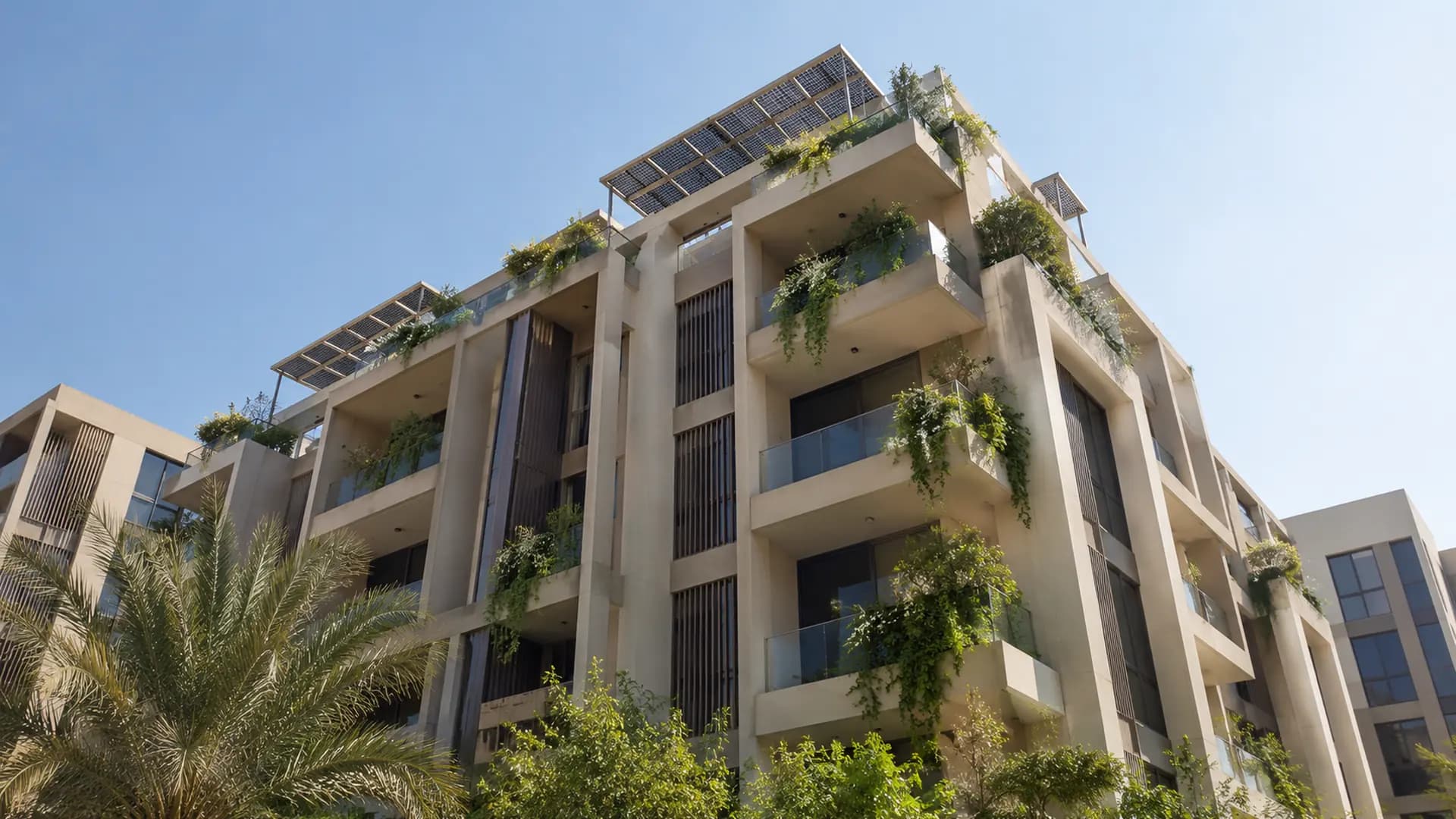
There is no single green building certificate in the UAE, and that is the first thing a buyer needs to understand. Dubai applies its own system, Abu Dhabi applies another, and a developer may in addition pursue an international framework such as LEED. Each has a different authority, a different scoring structure and, most importantly, a different scope. Before a rating means anything to your purchase, you need to know which system issued it and exactly what it covered.
One label, several different systems
Dubai's local framework is Al Sa'fat, administered through Dubai Municipality. Abu Dhabi uses the Estidama Pearl Rating System, administered by that emirate's own authority. LEED is an international system run by a body outside the UAE and pursued voluntarily, sometimes alongside a local rating.
They are not versions of the same thing. Their categories, prerequisites, rating levels and project types differ, so a level in one framework does not translate into a level in another. Treat them as separate claims requiring separate evidence, and read the certificate and its version rather than comparing names or colours. The above reflects what was published as of September 2026 and can change; verify with the issuing authority for the emirate the property is actually in.
What exactly was certified?
This single question resolves most confusion. A rating can attach to a masterplanned community, to one building within it, to a villa, to an interior fit-out, or to the way a completed building is operated. A community-level rating does not mean every tower inside it holds one, and a building-level rating says nothing about the interior of one apartment.
Ask for the certificate or the official rating evidence and read six fields on it: the project name, the specific building or area covered, the rating level, the framework version, the date, and the issuing or reviewing body. Then ask which stage it represents, because design-stage recognition, construction completion, interior fit-out, operational performance and neighbourhood-scale ratings are different claims and are often quietly interchanged in marketing.
Design compliance is not operating performance
A certificate records that a defined framework was satisfied at a defined stage. It does not record how the building behaves once people live in it. Between the two sit commissioning, control settings, maintenance regimes, occupancy patterns and simple user behaviour, and all of them can move the outcome substantially in either direction.
If your decision depends on lower running costs, ask for operating evidence rather than the certificate. Utility data for a comparable unit, the facilities manager's account of which systems are actually running as designed, and maintenance records are worth more than the logo. Compare like with like: the same unit type, similar occupancy, the same billing period and the same included services. A low bill can mean an empty apartment, and a high one can mean a large family rather than a failing building.
Five questions to put behind the rating
- What precisely was certified: the community, the building, this villa, the interior, or the operations?
- Which credits or systems in that framework materially affect the unit I am buying, rather than the project as a whole?
- Were those systems commissioned, and are the current control settings documented?
- Who maintains them, and where do replacement costs sit: in the service charge, in the reserve fund, or on me as owner?
- What operating evidence exists for the energy, water, comfort or indoor-air benefits being claimed?
If a seller or agent cannot answer the first two, the rating is decoration, not information. If they cannot answer the last three, you may still buy the property, but you should not pay extra for a performance claim nobody can support.
Where the costs actually land
Sustainability features are physical equipment, and equipment has a maintenance and replacement cost. Heat-recovery ventilation, greywater or irrigation systems, building management controls, high-performance glazing, solar equipment and smart metering all need servicing, and some have replacement cycles that will arrive while you own the property.
Ask where those costs sit. In a jointly owned building, ongoing operation is funded through the service charge and major replacement is normally the purpose of the reserve fund, which is ring-fenced and needs RERA approval before it is used. Service charges are approved annually by RERA per project and published on the DLD service charge index, which you can check free through Dubai REST for the specific project, use type and year. Check the actual approved figure for the building rather than an estimate, and ask whether any planned works are already known. Approved figures change each year; verify the current one before you commit.
If a premium is being asked, build the value bridge
When a seller attributes part of the price to sustainability, identify the benefit to you and the evidence for it. It might be lower running cost, better thermal comfort, quieter interiors, healthier indoor conditions, easier letting, or simply a preference you hold and are willing to pay for. All of those are legitimate; they are not all financial, and not all of them are recoverable on resale.
Build the chain explicitly: from certificate to the specific systems installed in this unit, from those systems to a measured operating result, and from that result to the amount you are prepared to pay. If a link in that chain is missing, treat the premium as unverified. That is not a reason to reject the property, which may be excellent on its own merits; it is a reason not to pay for a claim that has no evidence behind it.
Your verification plan after purchase
At handover, collect the manuals, commissioning records, control system access, warranty documents and maintenance schedules for every system the rating relies on. Without access to the controls, an efficient building can be operated inefficiently for years without anyone noticing.
For a resale, ask the facilities manager a blunter question: which of the original systems are still operating as designed, which have been overridden, replaced with simpler equipment, or disabled? Buildings age, contractors change, and a system that was commissioned correctly in year one is not necessarily running in year eight. Ask for the current maintenance contract and the last service reports.
When does this apply?
It applies to any property marketed as green, sustainable, energy-efficient or certified under a named framework, and to any purchase where a price difference is attributed to those features. It applies with extra force off-plan, where there is nothing to measure and the claim rests entirely on design intent and the developer's commitments in the sale and purchase agreement.
It applies differently outside Dubai. A property in Abu Dhabi is assessed under that emirate's framework and authority, and a property in another emirate under its own rules, so confirm which authority actually governs the asset before relying on any rating. It applies least where no sustainability claim is being made and no premium attached to one, although the running-cost questions are worth asking about any property.
Bottom line
A rating is a starting point for questions, not an answer. Establish which framework, which asset, which stage and which version, then move from the certificate to the systems, from the systems to the evidence, and from the evidence to the price. A well-run building with no certificate can outperform a certified one nobody maintained, and the documents tell you which you are looking at long before the marketing does.
Frequently asked questions
Does a local sustainability rating mean my utility bill will be low?
No. It indicates that the applicable rating requirements were met at the stage assessed. Your bill depends on the systems actually installed and working, the maintenance regime, how many people live in the unit, how they use cooling, and how the account is billed. Ask for utility data from a comparable unit and for the facilities manager's account of which systems are running as designed.
Can one project hold both a local rating and LEED?
Yes, and some do. A developer may pursue a local framework because it applies and an international one for positioning or for a particular tenant market. Verify each certificate separately: the issuing body, the scope, the stage and the version. They are not interchangeable, and holding two does not mean the scopes are the same; one may cover the base building and the other an interior or a phase.
Can I compare rating levels across different systems?
Not directly, and doing so is a common error. The frameworks use different categories, prerequisites, weightings and scopes, so a level in one is not equivalent to a level in another. Compare the outcomes that matter to you instead, such as cooling load, glazing performance, water fittings, ventilation and metering, and ask for the evidence behind each rather than equating the labels.
Does a green rating help at resale?
It may support marketability with buyers and tenants who value it, and it can matter to corporate tenants with their own reporting requirements. Whether it produces a measurable price difference in a specific building is not something anyone can assert responsibly without transaction evidence for that building. Look at registered transactions for comparable units through DLD data before assuming a resale benefit.
What should I ask for when buying off-plan?
Ask what rating is being targeted, under which framework and version, which asset it will cover, and at which stage it will be certified. Then ask what happens if it is not achieved, and check whether the sale and purchase agreement says anything about it at all. A target is a commitment only if the contract makes it one; otherwise it is a marketing intention that carries no remedy.
Is a certified building always more expensive to run?
No, and the assumption cuts both ways. Efficient systems can lower consumption, while high-amenity buildings of any kind tend to carry higher service charges because of what they contain, not because of a certificate. Separate the two: look at the approved service charge on the DLD index for the specific project, then look separately at the consumption evidence for the unit type.
Related guides
- Sharjah Sustainable City Property Guide: Verify the Sustainability Before You Buy
- Buying a Dubai Villa with Solar Panels: Shams Dubai and Handover Checklist
- EV Charging Readiness in Dubai Apartment Buildings: Buyer Checklist
- Dubai Property Service Charges: How to Check Them and Measure Their Impact
- New Building vs Older Building in Dubai: Total-Cost Buyer Guide
Laguna Life is a DLD/RERA-registered brokerage that starts from your goal rather than from what is for sale, and verifies every figure at its official source. Send us the project and the certificate you were shown and we will help you establish what it covers and what evidence sits behind it before you pay anything for it. WhatsApp wa.me/971561000928 or visit lagunalife.ae. Register your interest now.